Independent game developers including Mojang, Oxeye Game Studio and Wolfire Games are jamming live this weekend. The theme: real-time strategy shoot 'em ups set in a steampunk ancient Egypt. Watch the stream at Humble Bundle. — Rob
It's that time again. Maggie is back at the largest science convention in the Western Hemisphere for four days of wall-to-wall awesomeness. Each day, she'll tell you about some of the cool things she learned watching scientists from all over the world talk about their work. Check the bottom of each post to find links to earlier posts in this series!
Each year, the American Association for the Advancement of Science holds a conference. Scientists from every discipline you can think of attend. They come from all over the world bearing fascinating studies they're dying to talk about, and Power Point presentations they'd probably rather I didn't critique. The result: The worst part about this conference (besides the aforementioned poorly done Power Points) is trying to choose which session you want to see. There's often as many as a dozen occupying the same time slot. Usually, three or four of those will strike me as something I MUST find out more about.
Friday morning, I picked a session that I hoped would provide some background and context on issues you and I are already talking about. Birth control—and, specifically, who should have access to it—has become a major issue in the current presidential campaign. Along with that has come a lot of confusion and misinformation about how birth control works, how effective it is, and what we know about its potential side effects. My first session of the day: Fifty Years of the Pill: Risk Reduction and Discovery of Benefits Beyond Contraception.
The first thing I learned: If you're taking an oral contraceptive, there's a good chance that you're doing it wrong.
Get your weekend going with Garoto Nacional by Strausz, a blast of anime, explosions, monsters, NSFW flesh, etc., set to a pounding dance track of similar dimensions. [Video Link. Released by Penetra Records]
Spotted by the cash-register at London Drugs, a giant discount pharmacy-cum-big-box-store in downtown Vancouver,
these cheap RFID-blocking credit-card sleeves.
The Canadian Harper government's policy of not allowing government researchers to speak without approval and without being attended by political minders is in the news again. A series of speakers at an AAAS meeting told the international science community that climate, environmental and health research that calls government policy into question is routinely suppressed. Prof Andrew Weaver of U Victoria said, "The only information [the press] are given is that which the government wants, which will then allow a supporting of a particular agenda."
The allegation of "muzzling" came up at a session of the AAAS meeting to discuss the impact of a media protocol introduced by the Conservative government shortly after it was elected in 2008.
The protocol requires that all interview requests for scientists employed by the government must first be cleared by officials. A decision as to whether to allow the interview can take several days, which can prevent government scientists commenting on breaking news stories.
Sources say that requests are often refused and when interviews are granted, government media relations officials can and do ask for written questions to be submitted in advance and elect to sit in on the interview...
The Postmedia News journalist obtained documents relating to interview requests using Canada's equivalent of the Freedom of Information Act. She said the documents show interview requests move up what she describes as an "increasingly thick layer of media managers, media strategists, deputy ministers, then go up to the Privy Council Office, which decides 'yes' or 'no'".
Here's an interesting, short memoir about science fiction in Africa, written by Jonathan Dotse, a science fiction writer in Accra, Ghana. Dotse describes how his early exposure to science fiction changed his outlook on life, and how he sees the field relating to the future of Africa.
Imagine a young African boy staring wide-eyed at the grainy images of an old television set tuned to a VHF channel; a child discovering for the first time the sights and sounds of a wonderfully weird world beyond city limits. This is one of my earliest memories; growing up during the mid-nineties in a tranquil compound house in Maamobi; an enclave of the Nima suburb, one of the most notorious slums in Accra. Besides the government-run Ghana Broadcasting Corporation, only two other television stations operated in the country at the time, and satellite television was way beyond my family’s means. Nevertheless, all kinds of interesting programming from around the world occasionally found its way onto those public broadcasts. This was how I first met science fiction; not from the tomes of great authors, but from distilled approximations of their grand visions.
This was at a time when cyberpunk was arguably at its peak, and concepts like robotics, virtual reality, and artificial intelligence were rife in mainstream media. Not only were these programs incredibly fun to watch, the ideas that they propagated left a lasting impression on my young mind for years to come. This early exposure to high technology sent me scavenging through piles of discarded mechanical parts in our backyard; searching for the most intriguing sculptures of steel from which I would dream up schematics for contraptions that would change the world as we knew it. With the television set for inspiration and the junkyard for experimentation, I spent my early childhood immersed in a discordant reality where dreams caked with rust and choked with weeds came alive in a not-so-distant future; my young mind well aware of the process of transformation occurring in the world around me; a world I was only just beginning to understand.
This ad hearkens back to the days before America came to mistrust its military-industrial complex, the dreamtime when the scream of jets was a sound to comfort your children.
Dr Ben "Bad Science" Goldacre sez, "I did a really sophisticated and complex data visualisation. I think you might enjoy it. There's definitely a pattern in there, I just need to decide what statistical tests will best extract the signal from the noise."
Western Sky Loans boasts that it's "not a Payday Loan!" Whatever it is, a 116.73% APR on a $5,075 loan seems a bit steep. After 84 monthly payments you'll have spent $40,872.72 paying it back.
There's been a lot of talk about some portion of the RSA keys on the Internet being insecure, with "2 out of every 1000 keys being bad". This is incorrect, as the problem is not equally likely to exist in every class of key on the Internet. In fact, the problem seems to only show up on keys that were already insecure to begin with -- those that pop errors in browsers for either being unsigned or expired. Such keys are simply not found on any production website on the web, but they are found in high numbers in devices such as firewalls, network gateways, and voice over IP phones.
It's tempting to discount the research entirely. That would be a mistake. Certainly, what we generally refer to as "the web" is unambiguously safe, and no, there's nothing particularly special about RSA that makes it uniquely vulnerable to a faulty random number generator. But it is extraordinarily clear now that a massive number of devices, even those purportedly deployed to make our networks safer, are operating completely without key management. It doesn't matter how good your key is if nobody can recognize it as yours. DNSSEC will do a lot to fix that. It is also clear that random number generation on devices is extremely suspect, and that this generic attack that works across all devices is likely to be followed up by fairly devastating attacks against individual makes and models. This is good and important research, and it should compel us to push for new and interesting mechanisms for better randomness. Hardware random number generators are the gold standard, but perhaps we can exploit the very small differences between clocks in devices and PCs to approximate what they offer.
You'd think that the proponents of SOPA[1] would give up that legislative dead parrot's ghost. But they're still doing the rounds on radio and in print, claiming that millions of Americans were 'duped' into opposing their harmless little internet censorship law.
The fresh (!) talking points go like this: Wikipedia, Reddit, Boing Boing and others 'lied' to the public about what SOPA was in the crucial final moments, 'abused our power' by going dark for a day, and thereby tricked legislators and the public into turning on a much-needed new law.
Tim O'Reilly tweeted: "Quantified self for caffeine addicts -- IOS app to optimize intake. (Didn't know half-life in body was 5 hours!)"
Two doctors at Penn State University have developed Caffeine Zone, a free iOS app that tells you the perfect time to take a coffee break to maintain an optimal amount of caffeine in your blood — and, perhaps more importantly, it also tells you when to stop drinking tea and coffee, so that caffeine doesn’t interrupt your sleep.
More fun from the self-loathing society: This American Life had a show about how young female undercover cops infiltrated a high school and flirted with boys to entrap them into selling pot, so they could charge them with felonies and destroy their lives at an early age.
Last year in three high schools in Florida, several undercover police officers posed as students. The undercover cops went to classes, became Facebook friends and flirted with the other students. One 18-year-old honor student named Justin fell in love with an attractive 25-year-old undercover cop after spending weeks sharing stories about their lives, texting and flirting with each other.
One day she asked Justin if he smoked pot. Even though he didn't smoke marijuana, the love-struck teen promised to help find some for her. Every couple of days she would text him asking if he had the marijuana. Finally, Justin was able to get it to her. She tried to give him $25 for the marijuana and he said he didn't want the money -- he got it for her as a present.
A short while later, the police did a big sweep and arrest 31 students -- including Justin. Almost all were charged with selling a small amount of marijuana to the undercover cops. Now Justin has a felony hanging over his head.
For people who still think it's important to shower with soap, this is neat: a piggybacking soap bar system. When the bar of soap becomes a sliver, you just stick it into the hollow part of a new bar of Stack soap.
Criticism of C-30, Canada's proposed domestic spying law, has focused on the fact that the police could access certain kinds of ISP subscriber information without a warrant. But as Terry Milewski writes on the CBC, the bill also gives the government the power to appoint special inspectors who can monitor and copy all information that passes through an ISP, also without a warrant.
The inspector, says the bill, may "examine any document, information or thing found in the place and open or cause to be opened any container or other thing." He or she may also "use, or cause to be used, any computer system in the place to search and examine any information contained in or available to the system."
You read that right. The inspector gets to see "any" information that's in or "available to the system." Yours, mine, and everyone else's emails, phone calls, web surfing, shopping, you name it. But, if that sounds breath-taking enough, don't quit now because the section is still not done.
The inspector — remember, this is anyone the minister chooses — is also empowered to copy anything that strikes his or her fancy. The inspector may "reproduce, or cause to be reproduced, any information in the form of a printout, or other intelligible output, and remove the printout, or other output, for examination or copying."
Oh, and he can even use the ISP's own computers and connections to copy it or to email it to himself. He can "use, or cause to be used, any copying equipment or means of telecommunication at the place."
In short, there's nothing the inspector cannot see or copy. "Any" information is up for grabs. And you thought the new airport body scanners were intrusive?
Last night, Rob posted a very good piece on Apple's new "Gatekeeper" technology, which defaults to warning users of Apple's new Mountain Lion OS that software from companies that haven't been officially recognized by Apple should not be installed (though users can still choose to override it, or turn it off).
But I have one rather large quibble with Rob's piece. He wrote:
The truth is that Macs don't currently suffer much from malicious software, and DRM-esque lockouts are always circumvented. So what's the point of a DRM-esque system for malware prevention?
I agree that DRM is always circumvented, and it is especially circumvented by copyright infringers and malware creators. But I think that Rob has misunderstood the primary value of DRM to technology companies: because many countries' laws prohibit breaking DRM even if you're not doing anything illegal, DRM gives companies the right to sue competitors who make compatible products and services.
The law has always recognized that interoperability is good for competition, markets, and the public. From generic windshield-wiper blades and hubcaps to third-party hard-drives and keyboards and inkjet toner, and software like Pages and Keynote, the law recognizes that there is a legitimate reason to reverse-engineer a competitor's products and make new products that replace, expand and augment them.
On the always-excellent How to Be a Retronaut site, a great collection of 1960s fallout shelter ads, a perfect capsule of upbeat, cheerful fear-selling.
The @Vikileaks30 account on Twitter has been publishing embarrassing personal information about Canada's Public Safety Minister Vic Toews, who is pushing for a domestic spying law that would require ISPs to gather and retain your personal information and turn it over to police without a warrant. The Vikileaks account kicked off with excerpts from the affidavits from Toews's very ugly divorce, including his ex-wife's allegations about his abuse of his official government expense accounts. The account created a nationwide stir over the domestic spying proposal, and has caused a rare (and possibly strategic*) climbdown from the majority Conservative government.
Now The Ottawa Citizen newspaper has tricked the person behind the anonymous account into visiting a website that it controls, and have traced back the IP address used in the trap to the House of Commons, suggesting that Toews's nemesis works for the federal government. The Citizen claims that the IP address has also been used to "frequently" edit Wikipedia "[give] them what appears to be a pro-NDP bias" (the New Democratic Party is the left-leaning opposition party in Parliament).
While it's impossible to say who is actually the using the address without a full-scale investigation undertaken by the House of Commons, a trace of the IP address shows it is also used by an employee of the House to post comments on a website for fans of the musician Paul Simon.
When reached by phone, the employee said that while he frequents the Paul Simon website he has nothing to do with the Vikileaks30 Twitter account.
A spokeswoman for the Speaker of the House of Commons said she is not aware of any investigation into whether any House IP addresses are behind the Vikileaks30 account. In order for an official government investigation to begin a complaint would have to be filed by a Member of Parliament.
* "Possibly strategic" because it looks like they're rushing this to committee, which is likely to go closed-door, exclude skeptical expert testimony, and speedily conclude that the bill is just fine as-is while maintaining a low public profile
(Thanks, Colin!)
Google has been caught circumventing iOS's built-in anti-ad-tracking features in order to add Google Plus functionality within iPhone's Safari browser. The WSJ reports that Google overrode users' privacy settings in order to allow messages like "your friend Suzy +1'ed this ad about candy" to be relayed between Google's different domains, including google.com and doubleclick.net. This also meant that doubleclick.net was tracking every page you landed on with a Doubleclick ad, even if you'd opted out of its tracking.
I believe that Google has created an enormous internal urgency about Google Plus integration, and that this pressure is leading the company to take steps to integrate G+ at the expense of the quality of its other services. Consider the Focus on the User critique of Google's "social ranking" in search results, for example. In my own life, I've been immensely frustrated that my unpublished Gmail account (which I only use to anchor my Android Marketplace purchases for my phone and tablets, and to receive a daily schedule email while I'm travelling) has somehow become visible to G+ users, so that I get many, many G+ updates and invites to this theoretically private address, every day, despite never having opted into a directory and never having joined G+.
In the iPhone case, it's likely that Google has gone beyond lowering the quality of its service for its users and customers, and has now started to violate the law, and certainly to undermine the trust that the company depends on. This is much more invasive than the time Google accidentally captured some WiFi traffic and didn't do anything with it, much more invasive than Google taking pictures of publicly visible buildings -- both practices that drew enormous and enduring criticism at the expense of the company's global credibility. I wonder if this will cause the company to slow its full-court press to make G+ part of every corner of Google.
EFF has an open letter to Google, asking them to make amends for this:
It’s time for a new chapter in Google’s policy regarding privacy. It’s time to commit to giving users a voice about tracking and then respecting those wishes.
For a long time, we’ve hoped to see Google respect Do Not Track requests when it acts as a third party on the Web, and implement Do Not Track in the Chrome browser. This privacy setting, available in every other major browser, lets users express their choice about whether they want to be tracked by mysterious third parties with whom they have no relationship. And even if a user deleted her cookies, the setting would still be there.
Right now, EFF, Google, and many other groups are involved in a multi-stakeholder process to define the scope and execution of Do Not Track through the Tracking Protection Working Group. Through this participatory forum, civil liberties organizations, advertisers, and leading technologists are working together to define how Do Not Track will give users a meaningful way to control online tracking without unduly burdening companies. This is the perfect forum for Google to engage on the technical specifications of the Do Not Track signal, and an opportunity to bring all parties together to fight for user rights. While the Do Not Track specification is not yet final, there's no reason to wait. Google has repeatedly led the way on web security by implementing features long before they were standardized. Google should do the same with web privacy. Get started today by linking Do Not Track to your existing opt-out mechanisms for advertising, +1, and analytics.
Google, make this a new era in your commitment to defending user privacy. Commit to offering and respecting Do Not Track.
John Scalzi's Big Idea introduces Bruce Schneier's excellent new book Liars and Outliers, and interviews Schneier on the work that went into it. I read an early draft of the book and supplied a quote: "Brilliantly dissects, classifies, and orders the social dimension of security-a spectacularly palatable tonic against today's incoherent and dangerous flailing in the face of threats from terrorism to financial fraud." Now that the book is out, I heartily recommend it to you.
It’s all about trust, really. Not the intimate trust we have in our close friends and relatives, but the more impersonal trust we have in the various people and systems we interact with in society. I trust airline pilots, hotel clerks, ATMs, restaurant kitchens, and the company that built the computer I’m writing this short essay on. I trust that they have acted and will act in the ways I expect them to. This type of trust is more a matter of consistency or predictability than of intimacy.
Of course, all of these systems contain parasites. Most people are naturally trustworthy, but some are not. There are hotel clerks who will steal your credit card information. There are ATMs that have been hacked by criminals. Some restaurant kitchens serve tainted food. There was even an airline pilot who deliberately crashed his Boeing 767 into the Atlantic Ocean in 1999.
My central metaphor is the Prisoner’s Dilemma, which nicely exposes the tension between group interest and self-interest. And the dilemma even gives us a terminology to use: cooperators act in the group interest, and defectors act in their own selfish interest, to the detriment of the group. Too many defectors, and everyone suffers — often catastrophically.
The Humble Indie Bundle people are gearing up for their next event, the Humble Bundle Mojam, and this one's pure charity. Humble fans voted on which game they wanted to see the folks at Mojang (creators of Minecraft) make, and over the weekend, Mojang is going to build it, live and on camera, in 60 hours. At any time, you can buy Mojang's new game at any price you name, and all the proceeds will go to up to four charities of your choosing. As of 4AM on the Friday it kicks off, the project has raised about $17,000 for charity, and it's just getting started.
Mojang has one weekend to make your game — live! The indie studio Mojang will be livestreaming all the glory and drama of making a brand new game in 60 hours. Based on a poll of more than 100,000 users, Mojang is tackling a real-time strategy shoot 'em up with a steampunk ancient Egypt theme!
Pay-what-you-want for the game any time during the jam. Use the form below to pre-purchase the game and support vital charities.
All proceeds go to charity! You can support up to four vital non-profit organizations: The Child's Play Charity, the Electronic Frontier Foundation, the American Red Cross, and — for the first time in a Humble Bundle — charity: water, a non-profit organization bringing clean, safe drinking water to people in developing nations.
The new OS X Gatekeeper encourages desktop apps to be registered with Apple, with users warned against installing unsigned software unless they disable the prompts.
The benefits—and the potential pitfalls—are obvious. It's intended as as an anti-malware system (with a whitelist rather than a blacklist), and the registration process will be simple and inexpensive. It'll destroy the nascent market for sleazy Windows-style antivirus subscriptions.
On the other hand, it's under the OS vendor's control, and once established, offers it certain temptations. Will Apple use it to anti-competitively influence the desktop software market? Will OS X end up as closed to unapproved developers as iOS? Will the controls end up co-opted by governments?
The Blast Lab at Imperial College, London, is a place where scientists study how explosions affect the human skeleton, and try to find ways to mitigate some of those effects. As you can imagine, this involves blowing stuff up fairly regularly and The Blast Lab is a pretty loud place.
But the team of students behind PLoS' Inside Knowledge blog noticed something cool about that. The sounds in The Blast Lab weren't just loud noises, they were loud notes. Edit them together, and you could reproduce a whole song, using nothing but sounds recorded in a working scientific laboratory.
In this video, the Inside Knowledge crew plays The White Stripes' "Seven Nation Army" on the Imperial College Blast Lab. In case you're curious, here's the breakdown showing what lab equipment the team used to replicate the sound of which instruments.
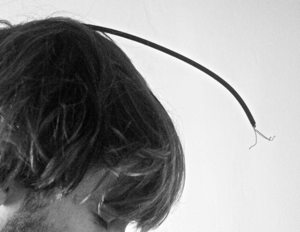
Bass Guitar: Main sensor output cable
Bass Drum: Blast Rig
Toms: Hammer & Storm Case
Hi-Hat: Oil Spray
Cymbal: Blast Plate
'Vocals': Laces to contain dummy leg during blast
'Guitar': Accelerometer cable & Fastening Strings
I'm going to be speaking on Monday, February 20th, at the meeting of the British Columbia Sustainable Energy Association, starting at 7:00 pm. My presentation will focus on the North American electric grid—where it came from, how it works today, and how it affects what we can and can't do in the future. I'll be talking about a lot of the big themes that I cover in my upcoming book, Before the Lights Go Out. — Maggie
"Encrypt Facebook is a Chrome extension that would prevent snooping on the discussions,status updates in Facebook groups by storing it them in an encrypted format on Facebook's database instead of normal text and also it would convert encrypted format back into normal text whenever that particular group's url is accessed in Chrome."
(Thanks, Joly!)
— Cory
Justine Larbalestier, a very good novelist with very bad RSI, has written a great post called "Why I Cannot Write a Novel With Voice Recognition Software." In it, she explains why machine-based speech-to-text software isn't sufficient for fiction. I think that if I absolutely lost the use of my hands and had no other choice, I'd probably dive into speech-to-text and gut it out, but nothing short of absolute necessity would get me to write fiction with machine-based speech-recognition.
Most of my first drafts are written in a gush of words as the characters and story come flowing out of me. Having to start and stop as I correct the VRS errors, and try to get it to write what I want it to write, interrupts my flow, throw me out of the story I’m trying to write, and makes me forget the gorgeously crafted sentence that was in my head ten seconds ago.
Now, yes, when I’m typing that gorgeously crafted sentence in my head it frequently turns out to not be so gorgeously crafted but, hey, that’s what rewriting is for. And when I’m typing the sentence it always has a resemblance to its platonic ideal. With VRS if I don’t check after every clause appears I wind up with sentences like this:
Warm artichoke had an is at orange night light raining when come lit.
Rather than
When Angel was able to emerge into the orange night Liam’s reign was complete.
Which is a terrible sentence but I can see what I was going for and I’ll be able to fix it. But that first sentence? Leave it for a few minutes and I’ll have no clue what I was trying to say.
However, checking what the VRS has produced after Every Single Clause slows me down and ruins the flow.
Gever Tulley, co-founder of the Brightworks K-12 school, says:
The whine and growl of high-performance electric motors, the smell of ionized air, the squeal of rubber on pavement, the roar of the crowd and the thrill of the checkered flag -- this is the inaugural Grand Prix de la Mayonnaise!
Imagine a shipping crate: smaller than a refrigerator and larger than a microwave. This is the Super Parts Kit -- it contains all the tools and parts to construct a two, three, or four-wheeled vehicle large enough to carry an adult. Every team receives the exact same parts, but what they choose to do with those parts will determine the outcome of the race. Teams, from companies around the Bay Area, will spend all day Saturday, March 17, building hybrid electric/human-power vehicles of their own design. On Sunday, March 18, the street in front of Brightworks will be closed and transformed into a street track in the Grand Prix racing tradition.
Join Brightworks, the Bay Area’s newest alternative K-12 school, for the most exciting DIY racing event of the year. Music, food, and exciting up-close street-side viewing -- fun for the whole family!
Canadian MP Vic Toews is pushing bill C-30, a domestic spying bill that requires ISPs to log your online activity and give it to police without a warrant. He says that if you don't support this, you "stand with child pornographers." Canadians are giving MP Toews what he wants: on Twitter, Canadians are flooding his account with the hashtag TellVicEverything, spilling the intimate secrets of their lives: "Had impure thought," Jeremy Klaszus.
(Thanks, pbrstreetgang!) — Cory
Collector of anomalies, esoterica, and curiosities.
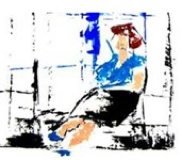
Back in 2008, I posted about Neil Harbisson, an artist with complete color blindness who makes paintings like those above using a camera/computer system that translates colors into sounds. In an editorial he's just written for the BBC News, he mentions that last year he "was attacked by three policemen at a demonstration who thought I was filming them." He Tweeted about it when it happened and posted the photo at left. "I told them I was listening to colors, but they thought I was mocking them and tried to pull the camera off my head," Harbisson writes. "The man who hears colour" (Thanks, Antinous!)
Virginia Prescott of New Hampshire Public Radio interviewed me today about the Apps for Kids podcast that my daughter Jane and I do each week.
With developers pumping out an estimated 2,000 applications daily for use on smart-phones and tablets, reviewers and web-critics are keeping busy sorting out what’s worth downloading, and what’s worth squat.
While some app-surfers could be overwhelmed by the chaos of the digital marketplace, Mark Frauenfelder saw a job opportunity for his adorable 8-year old-daughter, Jane. Together, they co-host Apps for kids, an app-review podcast for both kids and parents. Mark is the founder of Boing Boing, where you can hear the podcast.
IFPI, the international recording industry lobby, has gone on the offensive to save ACTA, the Anti-Counterfeiting Trade Agreement, an unprecedented international copyright agreement negotiated in secret (so secret that even Congress and the European Parliament weren't allowed to see it). In recent weeks, popular protests against ACTA have grown, and many nations are pulling back from ACTA.
IFPI doesn't like this. In fact, it says that popular demonstrations calling for substantive treaty negotiations to take place in the open "silence the democratic process."
In this statement, IFPI is using the term "democratic process" in a highly technical, specialized manner, citing a little-understood definition: "a process undertaken by corporate lobbyists and unelected bureaucrats without public oversight or transparency."
Another specialized vocab use that's interesting is the word "silencing," which, again, is used in the rare technical sense of "marching in the streets in thousands-strong throngs asking lawmakers to oversee and publicly debate international agreements."
Over the past two weeks, we have seen coordinated attacks on democratic institutions such as the European Parliament and national governments over ACTA. The signatories to this letter and their members stand against such attempts to silence the democratic process. Instead, we call for a calm and reasoned assessment of the facts rather than the misinformation circulating.
Collector of anomalies, esoterica, and curiosities.
Matthew Frye Jacobson, a professor of American Studies at Yale, made a gallery of hundreds of photographs of commercial buildings that have "Space Available." Indeed, that's the name of the photo series. For Jacobson, these signs are visceral representations of the economic crisis. Space Available is part of Jacobson's larger Historian's Eye project, a photographic and audio documentation of "Obama’s first term in office, the ’08 economic collapse and its fallout, two wars, the raucous politics of healthcare reform, the emergence of a new right-wing formation in opposition to Obama, the politics of immigration, Wall Street reform, street protests of every stripe, the BP oil spill, and the seeming escalation of anti-Muslim sentiment nationwide." Over at Design Observer, BB pal Rob Walker interviewed Jacobson.
From Design Observer:
The “Space Available” collection is more than 900 photographs of, basically, buildings with signs indicating vacant commercial or retail space. Let’s face it, that sounds incredibly boring. Why should we look at pictures of these mundane signs?
While there are a couple of images in it that I’m attached to, for the most part that gallery is not functioning in a way that’s meant to arrest you one image at a time. It’s the scale. There’s something cumulative about it.
I go back to the Bonnie Fox interview, where she said there’s nothing public about this crisis. And those signs were one of the few public markers she’d picked up on. Once you start noticing them, you see them everywhere you go — these massive numbers of fairly recently closed businesses. And it just goes unremarked and unnoted. Everything in the culture is privatized, including the crisis itself, right? One of the aspirations of that part of the site is to make that public again, to make it part of the public conversation about what’s happening to our society.
It’s a very hard crisis to photograph, for exactly the reasons she was talking about. I’d been out in the world trying to photograph it, and I couldn’t find it anywhere, until she tipped me to the space available signs. “Space Available” became a sub genre of its own, in my mind.
Collector of anomalies, esoterica, and curiosities.
A collaboration between artist Mark Reigelman and architect Jenny Chapman working with engineering consultant Paul Endres created a rustic cabin and installed it as a parasite on a big building in San Francisco. Too bad nobody is living in it. Yet. From Design Boom (Cesar Rubio photos):
…The structure, which measures approximately W7 x D8 x H11 feet, takes on a 19th-century architectural style. constructed from vintage building materials - it has a welded aluminum frame, with an exterior finished with 100 year-old reclaimed barn board from ohio - the dwelling is meant to be an homage to the romantic spirit of the western myth and a commentary on the arrogance of westward expansion. three curtained windows, allow the interior space of the petite abode to be seen day and night, standing as a lonely beacon in the city's dense landscape. 3 x 4 foot solar panels located on the rear roof, charge during daylight hours in order to illuminate the cabin's interior by night.
weighing over 1000 lbs.

















 , my book about the future of energy in the United States, will be published April 10th.




 The allegation of "muzzling" came up at a session of the AAAS meeting to discuss the impact of a media protocol introduced by the Conservative government shortly after it was elected in 2008.




 Two doctors at Penn State University have developed Caffeine Zone, a free iOS app that tells you the perfect time to take a coffee break to maintain an optimal amount of caffeine in your blood — and, perhaps more importantly, it also tells you when to stop drinking tea and coffee, so that caffeine doesn’t interrupt your sleep.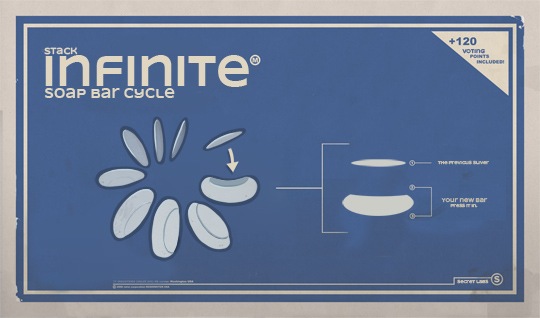


 On the always-excellent How to Be a Retronaut site, a great collection of 1960s fallout shelter ads, a perfect capsule of upbeat, cheerful fear-selling.
 The
The 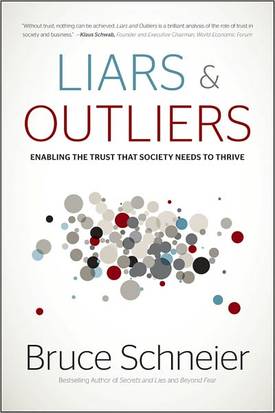



 Back in 2008, I
  With developers pumping out an estimated 2,000 applications daily for use on smart-phones and tablets, reviewers and web-critics are keeping busy sorting out what’s worth downloading, and what’s worth squat.